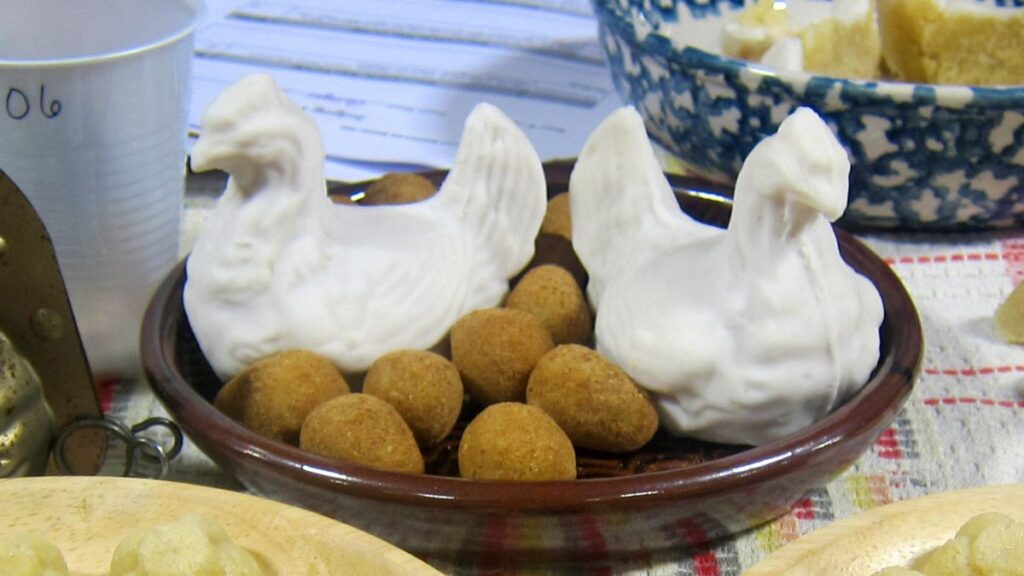
Somewhere between culinary myth and confectionery reality lies a word that refuses to be nothing short of intriguing: rohmarzipan. To the uninitiated, it reads like a refracted mirror of marzipan, the honeyed almond paste known the world over. Yet, to the cultural gourmand and the curious mind, rohmarzipan is a cipher: a term whispered in kitchens, blog threads, obscure recipe tomes, and the synesthetic dreams of pastry aficionados.
This is not your grandmother’s marzipan. This is its untamed spirit — raw, rebellious, and vividly undefinable.
Chapter 1 — What Is Rohmarzipan, Really? A Term Bound by Texture, Not Definition
If traditional marzipan is the smooth, almond‑buttery paste molded into fruits and festive novelties across Europe, rohmarzipan is its wilder counterpart: raw marzipan. The prefix roh, German for “raw,” is key. It signals an ingredient and a sensibility — one that values unrefined texture, pronounced almond flavor, and culinary authenticity over refined perfection.
Where marzipan might be polished, silky, and sweet — rohmarzipan is grainy, nutty, assertive.
The term itself does not dominate culinary dictionaries. It lives more vividly in the vernacular of artisan bakers, niche recipe circles, and Instagram captions that dare to juxtapose antiquated orthography with postmodern plating. But while the word may feel avant‑garde, the concept behind it has roots deep in confection history.
Chapter 2 — A Brief History of Marzipan and How Rohmarzipan Fits In
To understand rohmarzipan, you must first meet its ancestor.
Marzipan is believed to have originated in the medieval kitchens of the Middle East. Almonds were plentiful, sugar was expensive, and the alchemy of combining the two gave rise to a paste that was both practical and luxurious. From Persia it traveled through the crusades, into Spain and Sicily, and eventually flourished in the courts of Renaissance Europe.
In Germany, particularly in Lübeck and Königsberg, marzipan became so esteemed that it inspired guilds, festivals, and economic protection.
But the marzipan tradition as we know it — refined, emulsified, capped with sugar glory — emerged only after centuries of incremental refinement. It was polished, heated, beaten, and sweetened to buttery smoothness.
Rohmarzipan? It is that history’s silent rebel.
Think of it as marzipan before the refinement, before the suave, before the sugar took center stage. Think of the paste closer to its primal genetic code: almonds ground with a whisper of sweetener, coarse, earthy, and subtly alive.
In essence, rohmarzipan isn’t a new invention. It’s a rediscovery.
Chapter 3 — The Making: Crafting Rohmarzipan With Intent
Let’s linger on the making — because this is where sensory nuance meets artisanal philosophy.
The traditional marzipan maker aims for smoothness. Rolls, sheets, molded figures: perfection. But the rohmarzipan maker embraces grain. The paste is chunkier, more textured — it resembles an almond meal that remembers its last life as a whole nut.
Ingredients: Few. Pure. Intentional.
-
Raw almonds — unblanched or blanched, depending on desired bitterness
-
Natural sweetener — honey, raw cane sugar, date syrup
-
Neutral oil or almond oil — minimal, just enough to bind
-
A pinch of salt — to amplify
Some experimental artisans add cardamom, citrus zest, or a whisper of rose water. But the idea is not ornamentation — it’s essence.
Process — Slow, Textured, Intentful
-
Toast or lightly roast the raw almonds — not to the point of crispiness, but to coax out oils.
-
Grind gently — with a food processor set to pulse, creating a coarse meal rather than a smooth paste.
-
Sweeten sparingly — honey or syrup is folded in by hand, never overworked.
-
Bind with oil — just enough to bring the mix together, not enough to make it slick.
-
Rest and meld — refrigeration overnight deepens flavor and softens texture.
The resulting paste is a mosaic of nutty granules, honey ribbons, and aromatic complexity. It feels tactile — you see the grain. You almost hear it.
This is not marzipan meant to vanish on the tongue. It is meant to be experienced.
Chapter 4 — Tasting Notes: What Rohmarzipan Really Tastes Like
Imagine biting into history.
Where marzipan evokes sugary nostalgia — sweet, familiar, childlike — rohmarzipan delivers:
-
Nuttiness first: Bold, assertive, raw‑earth almond flavor.
-
Sweetness second: Not cloying, but reminiscent — honeyed warmth.
-
Texture as voice: Grainy, subtly sandy, yet rich — like stone fruit dusted with almond flour.
-
Finish: A whisper of salt, a breath of citrus if included.
It’s closer to a nut meal made manifest than to a candy‑bar center.
And that’s precisely its charm.
Chapter 5 — Rohmarzipan in Cultural Context
The gastronomic world is currently obsessed with pre‑industrial textures. Think sourdough with gaping holes, rye breads with cracked crusts, cheeses that smell of fields at dawn. Rohmarzipan fits neatly into this zeitgeist — a fetishization of original form.
In a gastronomic era that worships provenance and rejects sterile uniformity, rohmarzipan is timely.
Europe
In Germany, a nation protective of its almond paste heritage, some patissiers present rohmarzipan as a “heritage expression” — a nod to marzipan’s pre‑refinement ancestors. In niche coffee houses from Berlin to Munich, you’ll find rohmarzipan sandwiches nestled between oat biscuits and fig bars, marketed as rustic meets haute.
Middle East
In Persian and Levantine kitchens — where almond paste has ancient roots — rohmarzipan is not a novelty but a reclaimed identity. It resonates with traditional asabt — coarse pastes used as portable energy in desert caravans.
United States
On the West Coast, culinary experiments play with rohmarzipan in savory contexts: nestled inside roasted squash, folded into granola, or dolloped alongside blue cheese. Here, it rides the wave of cuisine that treats sugar as a texture ingredient, not the protagonist.
Asia
In fusion bakeries from Tokyo to Singapore, rohmarzipan is paired with sakura, matcha, kaffir lime — a collision of sweet and vegetal that echoes East‑West culinary crosswinds.
Chapter 6 — Rohmarzipan on the Plate: Culinary Innovation
Rohmarzipan is not just a paste; it’s a platform. Chefs and home cooks alike are reimagining its potential.
1. Rohmarzipan and Fruit
Forget fondant. Lightly smear rohmarzipan across slices of pear or fig. The grain contrasts with the fruit’s juiciness; almond earthiness tempers sweetness.
2. Salty + Sweet Combinations
Rohmarzipan paired with:
-
olive oil and flaky sea salt
-
aged manchego or pecorino
-
smoked almonds
This is boundary‑pushing dessert philosophy — sugar may be present, but salt is the new protagonist.
3. Breads and Spreads
A dollop of rohmarzipan on toasted sourdough elevates breakfast into ritual — its chewy, granulated texture lending complexity to a simple meal.
4. Ice Cream and Sorbet
Rohmarzipan swirled into ice cream yields a dessert that’s both creamy and textural — a chiaroscuro of smooth + coarse.
5. Beverage Infusions
Baristas fold tiny morsels of rohmarzipan into espresso crema for a drink that tastes like an almond orchard at dawn.
Chapter 7 — Why Rohmarzipan Matters in Today’s Food Scene
We live in a world that oscillates between two extremes:
-
Hyperrehined consumables — where uniformity is edible boredom.
-
Fermentation/foundational revivalism — where age‑old processes become trendy.
Rohmarzipan is both at once: ancient in essence, avant‑garde in cultural perception.
It matters because:
-
It celebrates imperfection.
-
It demands attention to texture.
-
It elevates an old ingredient into new conversations.
-
It shifts sweetness from protagonist to supporting role.
It’s a culinary mnemonic — a way of remembering that food isn’t just flavor, but experience.
Chapter 8 — Rohmarzipan vs. Marzipan: A Side‑by‑Side
| Feature | Marzipan | Rohmarzipan |
|---|---|---|
| Texture | Smooth, polished | Coarse, grain‑forward |
| Sweetness | High | Moderate |
| Processing | Intensive | Minimal |
| Use | Confection, figures | Spreads, innovative pairings |
| Philosophy | Refined indulgence | Earthy authenticity |
To call rohmarzipan merely “raw marzipan” is to sell it short. It is not a lesser cousin but a parallel expression.
Chapter 9 — Making Rohmarzipan at Home: A Guide
Here’s a thorough walkthrough for anyone who doesn’t just read about food but wants to live it:
Tools You’ll Need
-
Food processor
-
Spatula
-
Baking sheet
-
Airtight container
Step‑by‑Step
-
Select almonds — raw, fresh, high quality.
-
Optional toast — 8–10 minutes at 325°F just to awaken oils (not roast).
-
Pulse grind — stop before it becomes creamy.
-
Add sweetener incrementally — taste as you go.
-
Finish with oil and salt — bind lightly.
-
Chill for depth — 6–12 hours.
Pro Tips
-
Substitute honey with date syrup for deeper caramel notes.
-
Add zest of lemon or orange for brightness.
-
Pair with fleur de sel for contrast.
-
Store up to one week refrigerated; freeze up to one month.
Chapter 10 — The Psychology of Texture: What Rohmarzipan Teaches Us About Eating
This is more than a paste. It’s a sensory cue.
In texture psychology, smoothness is often equated with comfort and predictability. Graininess suggests complexity, depth, and substance. Rohmarzipan is emblematic of a collective shift: diners are craving texture back in their food — edible narratives that interrupt autopilot taste.
When you eat rohmarzipan, you’re doing more than tasting almonds and sweetener. You’re engaging with a sensory intelligence — one that demands mindfulness.
Chapter 11 — The Future of Rohmarzipan: From Fringe to Mainstay?
Could rohmarzipan become as ubiquitous as marzipan? Not in the sugary holiday table sense — but in artisanal food circles? Absolutely.
Food festivals, chef collaborations, social media virality, and the growing appetite for authentic, imperfect, textured food experiences suggest that rohmarzipan will continue its quiet rise.
We’ll see it in:
-
hybrid desserts
-
boutique bakeries
-
tasting menus
-
food magazines
-
culture essays on gustatory revival
Because food movements rarely explode — they permeate.
Chapter 12 — Rohmarzipan: More Than a Word, a Sensibility
The true gift of rohmarzipan isn’t that it’s raw or textured. It is that it invites us to slow down — to reconsider sweetness, complexity, and the narrative of food itself.
It asks:
-
Why do we smooth out texture?
-
What do we lose when we refine?
-
Can graininess be pleasurable?
-
Can simplicity be profound?
In rohmarzipan, we find answers that are both gustatory and philosophical.
It’s not just a confection.
It’s a reminder — a texture‑laden manifesto — that taste is as much about friction as it is about flavor.
Epilogue: A Ritual in Every Bite
The next time you encounter — or make — rohmarzipan, pause.
Feel the grain of the almonds between your fingers. Inhale the honeyed warmth. Let the texture sing against your tongue.
This is not sugar that disappears.
This is sweetness that converses.
This is rohmarzipan — the grainy testament to flavor, history, and the art of taste.